


The Gouritz Cluster Biosphere Reserve (GCBR)
is a designated UNESCO Biosphere Reserve due to its globally significant biodiversity value. The GCBR is also an action-oriented non-profit company, founded in 2011. We are driven to effectively restore and manage the natural ecosystems within our 3.2-million-hectare domain.
Our organisation is dedicated to the conservation of the region’s rich biodiversity, and the socio-economic development and wellbeing of its people. We aim to be a catalyst for change towards solving one of our greatest challenges: the disconnect between people and nature.
Projects

Friends of the Biosphere
Online Store
Blog
Resources

Our Vision
People and nature
living in harmony.

Our Mission
Nurturing resilience in Nature and Communities
Our Values
Integrity, respect, collaboration, innovation and sustainability.“We champion people and nature living in harmony”
We are all aware that humanity completely depends on the natural ecosystems that support us and all other life on Earth.
2021 marks the start of the UN Decade on Ecosystem Restoration.
As part of a global effort, the Gouritz Cluster Biosphere Reserve focuses on restoring degraded river, wetland, mountain and thicket ecosystems.
In the GCBR, we are growing collaborations with farmers and other landowners for effective fire and wildlife management, invasive alien plant control, river and wetland management.
We also plant thousands of spekboom and employ hard working field teams that clear tons of invasive plants.
We live and work in the spectacular, globally important Cape Floral Region; partner with us to create a healthy, resilient and safe place for future generations.
What is a Biosphere Reserve?

Latest Blog Posts

Silky Hakea Biocontrol: Nature’s Allies in the Fight Against an Invasive Invader
By Halcyone Muller Silky hakea (Hakea sericea) is one of the most problematic invasive alien plants affecting the fynbos ecosystems of the Western Cape. Introduced from Australia, this hardy shrub rapidly forms dense stands that outcompete indigenous vegetation,...
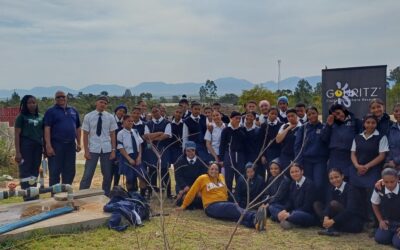
Celebrating World Water Week – Learning Why Every Drop Matters
Water is something we use every day without giving much thought to where it comes from or what it takes to make it safe for us to use. During World Water Week, the Gouritz Cluster Biosphere Reserve (GCBR), in collaboration with Hessequa Municipality, gave learners the...
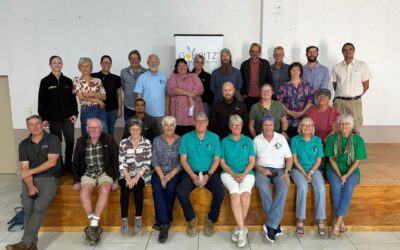
Strengthening Conservancies Across the Gouritz Biosphere
Across South Africa, conservancies bring landowners, residents and other local stakeholders together voluntarily to care for the natural environment within a defined area. Their activities vary according to local needs and capacity but may include protecting...
3.2-million-hectares
This 3.2-million-hectare area has been designated a UNESCO Biosphere Reserve due to its major biodiversity significance to the planet.
UNESCO Biosphere Reserve
This 3.2-million-hectare area has been designated a UNESCO Biosphere Reserve due to its major biodiversity significance to the planet. Find out more
3 global diversity hotspots
The only place in the world where three global biodiversity hotspots converge, namely the Cape Floristic Region, Succulent Karoo and Maputuland-Pondoland-Albany Thicket.
5 000+ indigenous plant species Over 5 000 indigenous plant species are found in this area, many of which are rare and unique.
670+ endemic plant species
This area has at least 670 endemic plant species which cannot be found anywhere else in the world.