By Halcyone Muller
In the Southern Cape, Biodiversity Stewardship is not a threat to landowners. It is an opportunity to be part of something bigger: protecting South Africa’s natural heritage while strengthening the future of the land they know and love.
The Southern Cape is home to some of the world’s most unique biodiversity, much of which occurs on privately owned land. This means that farmers and other landowners play a vital role in protecting the natural heritage of the region.
Biodiversity Stewardship is a voluntary conservation programme that allows landowners to partner with conservation authorities to protect important natural areas while retaining ownership and management of their land. Rather than being a restriction, stewardship is increasingly recognised as an opportunity to secure both environmental and economic benefits.
Many of South Africa’s conservation targets cannot be achieved through state-owned protected areas alone. By bringing privately owned land into stewardship agreements, landowners contribute directly to the national conservation estate, helping to protect threatened ecosystems, important water catchments, wildlife habitats, and ecological corridors.
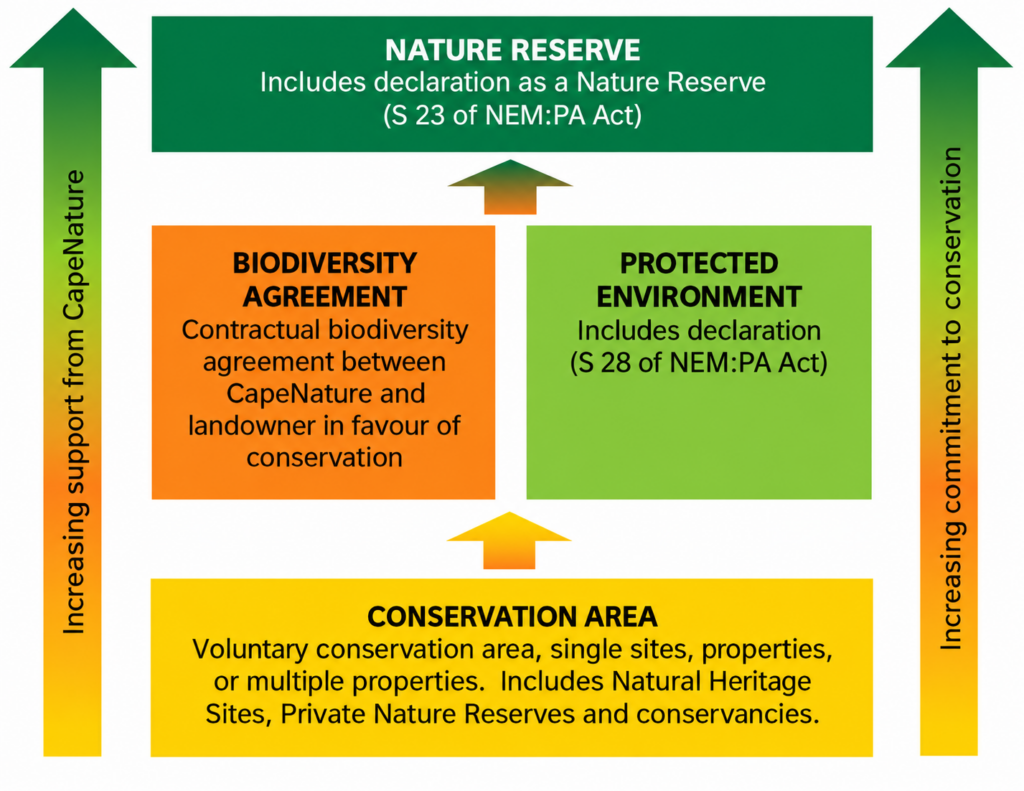
CapeNature has a dedicated Biodiversity Stewardship Programme which offers a range of conservation options, that aim to set up positive, proactive partnerships with landowners, to support and encourage them as they take on the responsibility of managing and protecting the natural assets that are in their care. The four options available to landowners are Conservation Areas, Biodiversity Agreements, Protected Environments and Nature Reserves (Fig. 1). All options are voluntary and each one can be tailored to the landowners needs. The higher categories offer more incentives and support by Cape Nature and relevant NGOs involved but have more restrictions and require greater commitment from landowners. It is important to note that you as the landowner always retain title to the property.
Which Stewardship Option Might Suit Your Property?
The most appropriate stewardship option depends on the biodiversity value of the property, how the land is currently used, and the level of long-term conservation commitment the landowner is comfortable with.
Conservation Areas may suit landowners who want to begin conserving important natural areas while maintaining flexibility. This can be particularly relevant to working farms, lifestyle properties and conservancies where conservation forms part of a broader mix of land uses.
Biodiversity Agreements offer a stronger commitment and may be appropriate where good-quality natural vegetation occurs alongside productive activities such as livestock farming, crop production or tourism. They allow landowners to formally commit to managing important biodiversity while continuing compatible economic activities.
Protected Environments are particularly useful at a landscape scale, where several neighbouring properties collectively protect an important ecological corridor, catchment or natural landscape. They can accommodate a range of compatible land uses and are therefore well suited to areas where conservation needs to work across property boundaries.
Nature Reserves provide the highest level of formal protection and are generally most appropriate for properties, or portions of properties, with exceptionally important biodiversity and where conservation is a major long-term land-use objective. Compatible activities such as sustainable grazing, eco-tourism and low-impact recreation may still be possible where they align with the reserve’s management plan.
Importantly, stewardship does not necessarily mean placing an entire farm under conservation. In many cases, productive areas can remain in agricultural use while priority natural habitats, rivers, wetlands or ecological corridors receive appropriate protection.
For commercial farmers, stewardship should be seen as an investment in the natural infrastructure that supports agricultural production. Healthy ecosystems provide clean water, reduce soil erosion, support pollinators, and improve resilience to droughts, floods, and climate change. Protecting these natural assets can enhance the long-term sustainability of farming operations.
Stewardship can also provide access to technical support, recognition, potential tax benefits, and opportunities linked to eco-tourism and sustainable production standards. Most importantly, it enables landowners to conserve biodiversity without giving up their role as productive land managers.
Conservation and agriculture are not opposing land uses. Across the Southern Cape, they are increasingly working hand in hand. Biodiversity Stewardship recognises farmers and landowners as custodians of the landscape and partners in conservation.
By embracing stewardship, landowners are not losing opportunities; they are creating them. They are helping to safeguard South Africa’s natural heritage while building resilient, productive landscapes for future generations.