
Bugweed (Solanum mauritianum) | Category 1b Invasive Alien Plant
Plant description and identification
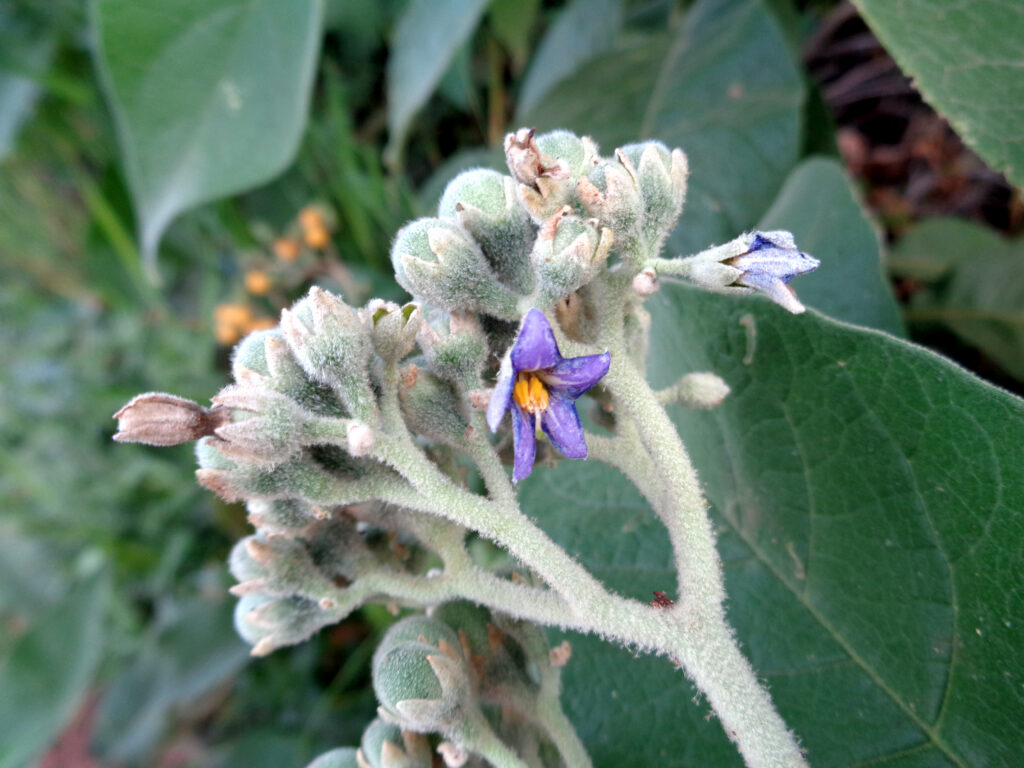
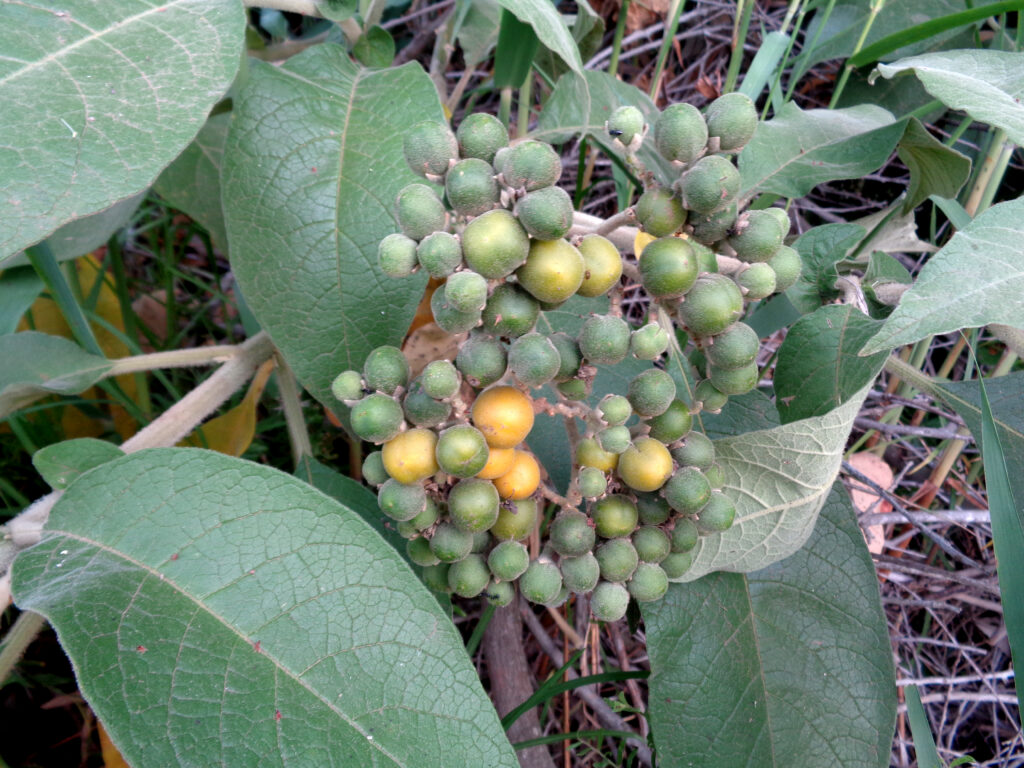
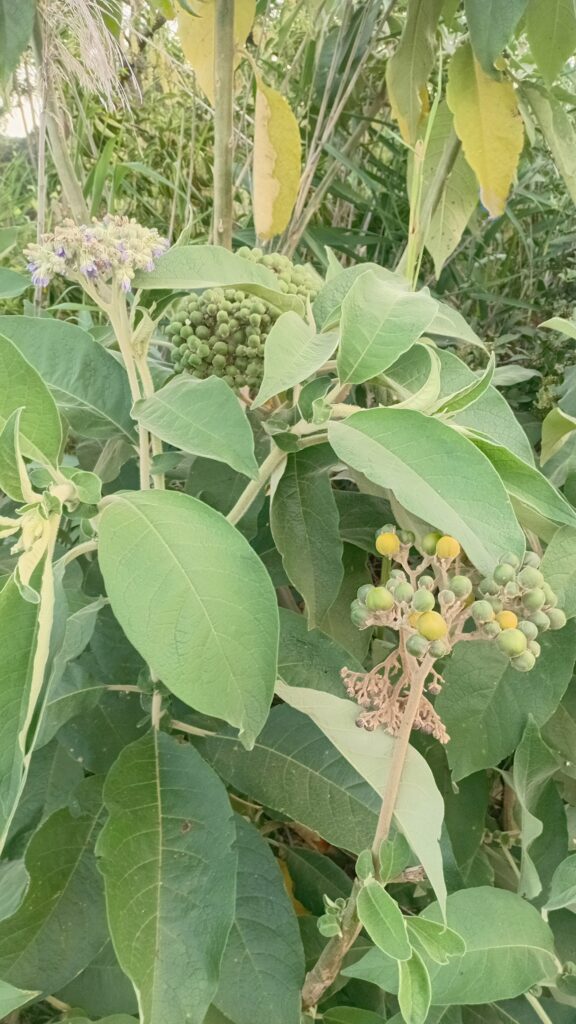
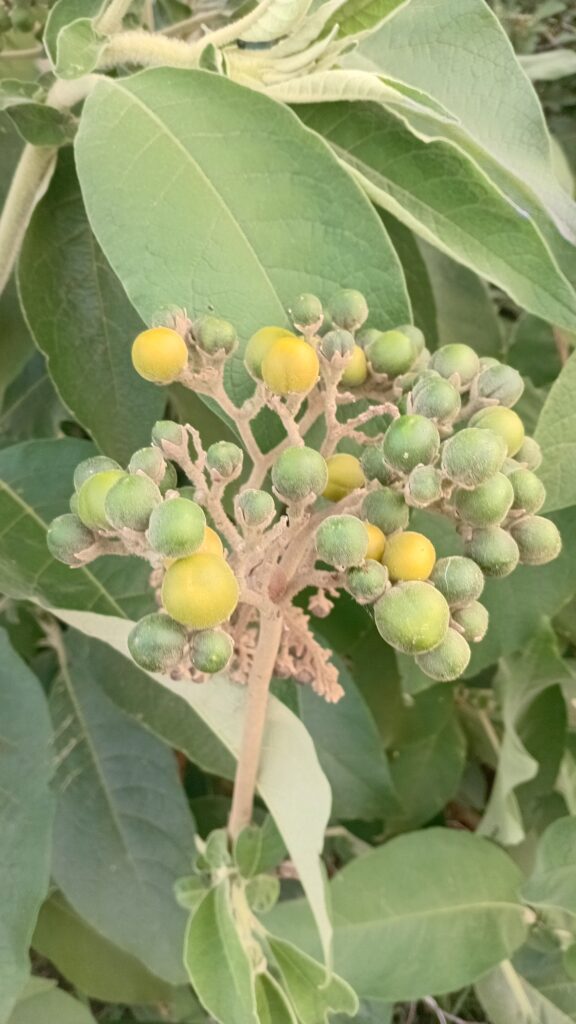
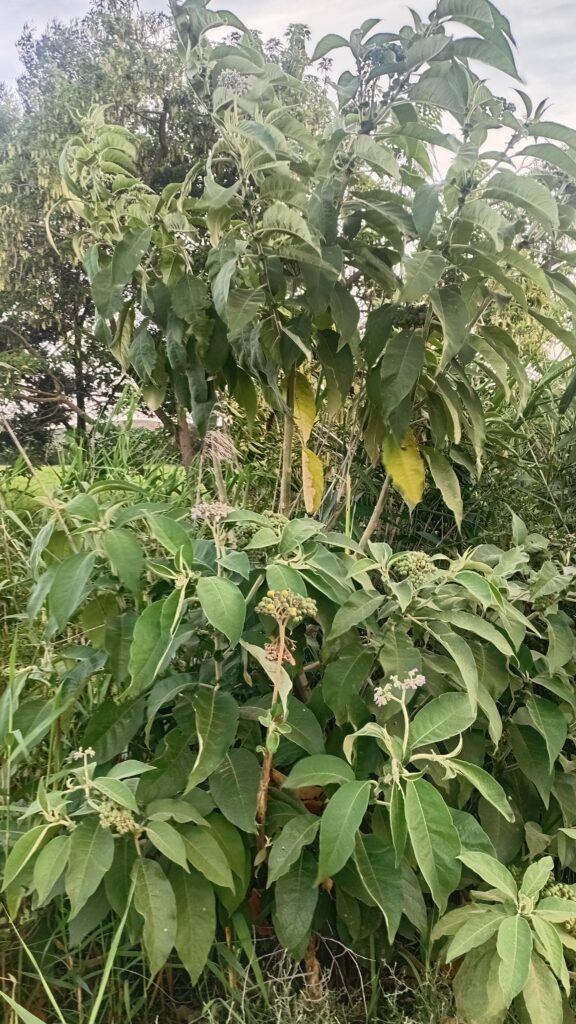
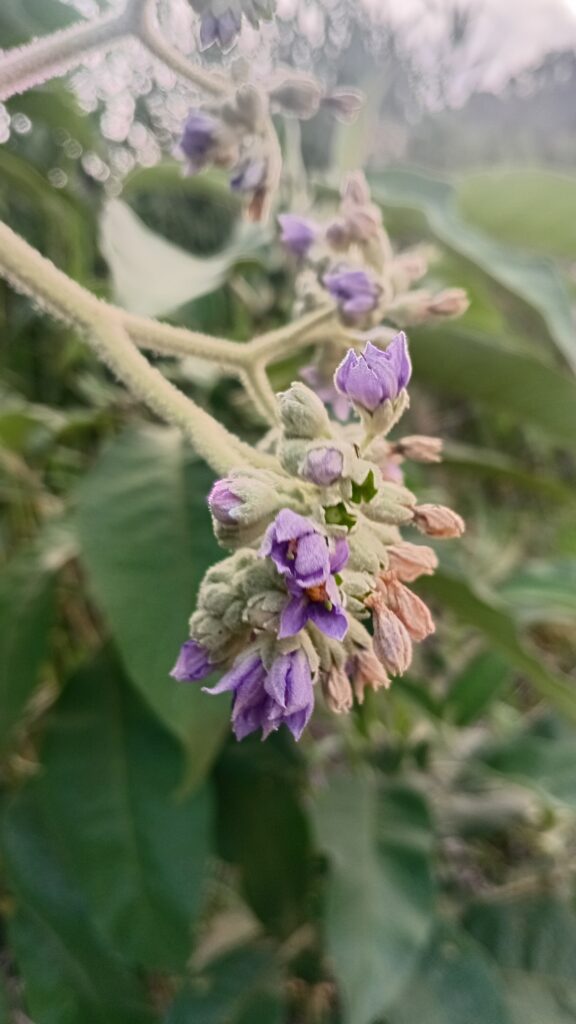
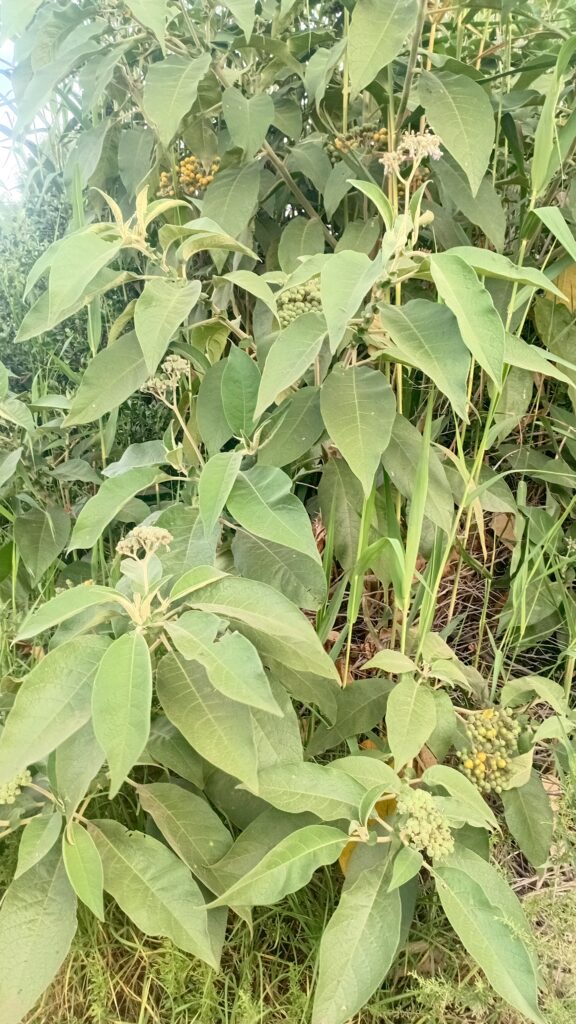
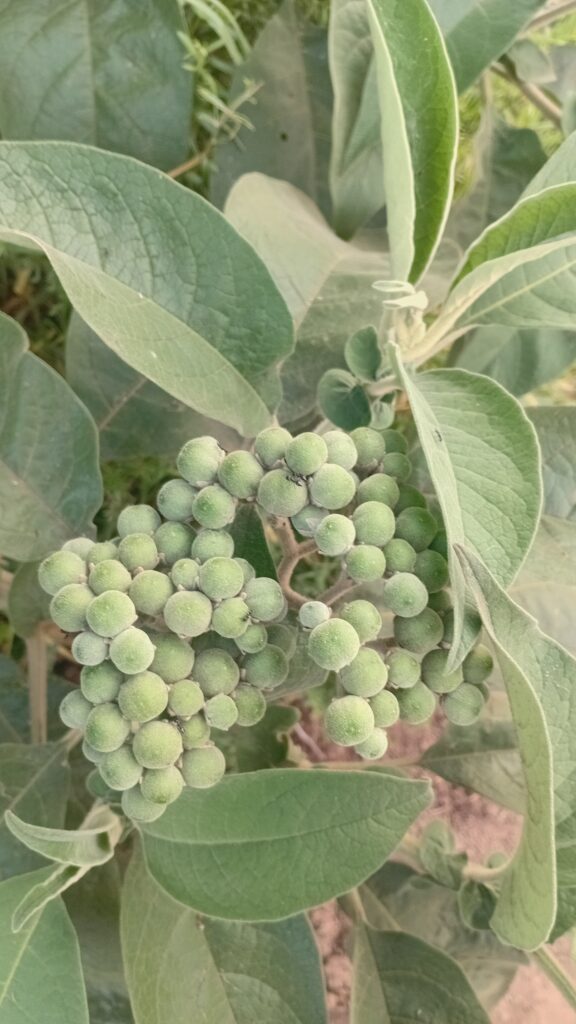
Bugweed (Solanum mauritianum) is a fast-growing, evergreen shrub or small tree that can reach heights of 2–10 metres. It is easily identified by its large, soft, velvety leaves covered in fine, whitish hairs, particularly on the undersides, giving the leaves a silvery-green appearance. The plant produces clusters of small, purple to lilac-blue flowers, followed by round green berries that turn yellow when ripe. These berries resemble small tomatoes in shape, although not in colour. Flowers and berries at different stages of development can often be found on the same plant throughout the year (Olckers, 2011). Bugweed grows rapidly in disturbed areas, along riverbanks, forest margins and roadsides, often forming dense stands that shade out indigenous vegetation (Olckers & Zimmermann, 1991).
History and introduction
Bugweed originates from South America and was likely spread internationally through Portuguese trade routes during the early 16th century. Its exact introduction date into South Africa is unknown, but it was first recorded in KwaZulu-Natal in the early 1860s (Olckers, 2011). Historical records indicate that it had become widespread by 1881 (Olckers & Zimmermann, 1991).
Bugweed is particularly invasive in high-rainfall areas, including riverbanks, forest margins, agricultural land and plantations. Its rapid growth and dense foliage allow it to outcompete our indigenous vegetation. Birds consume its berries, dispersing seeds over large distances. A single mature plant can produce between 100,000 and 200,000 seeds per year, making it particularly difficult to control (Olckers, 2011).
Biological control
Two biological control agents have been released for bugweed in South Africa: the lace bug (Gargaphia decoris) in 1999 and the flowerbud-feeding weevil (Anthonomus santacruzi) in 2008/2009 (Olckers, 2011).
The lace bug feeds on the undersides of leaves, causing yellowing, premature leaf drop and reduced plant growth (Agricultural Research Council [ARC], n.d.-b). The weevil attacks flower buds, preventing flowers from developing and decreasing fruit and seed production (ARC, 2014).
Although both agents have established in parts of South Africa, their effectiveness varies between areas. Research has shown that the weevil performs better in coastal KwaZulu-Natal than in inland areas, highlighting the influence of climate on biological control success (Centre for Invasion Biology [CIB], 2019). Biological control therefore remains a useful supporting tool rather than a complete replacement for conventional clearing (Olckers, 2011).
Management and control
Young bugweed plants can be manually uprooted, while larger plants can be cut down and their stumps treated with a suitable registered herbicide to prevent regrowth (Bromilow, 2023). Chemical control methods include foliar spraying, basal stem treatments and cut-stump applications. These methods should be used with caution and in accordance with the appropriate safety protocols.
Mechanical clearing alone is often ineffective because bugweed can resprout from cut stems and roots. Clearing can also stimulate seed germination, making regular follow-up treatments critically important (Olckers, 2011). Effective management requires a combination of mechanical and chemical control, supported by biological control where these agents are established.
Precautions during removal
Care should always be taken when removing bugweed, as the fine hairs covering its leaves and stems can cause skin irritation and respiratory discomfort. Clearing activities, particularly cutting and handling the foliage, can release these hairs into the air (Olckers, 2011).
In general, when removing bugweed precaution should be taken by wearing gloves, long sleeves, long pants and even eye protection or a mask. These precautions can be taken to prevent the hairs from irritating the skin eyes and respiratory tract. Avoid touching the face or eyes during clearing, and wash exposed skin and work clothing afterwards.
Bugweed is also toxic if ingested, particularly its unripe green berries (Olckers, 2011). Therefore, care should be taken to prevent accidental consumption by people or animals. When applying herbicides, always follow the product label and use the required protective equipment. Cut plants should be treated appropriately to prevent regrowth, and follow-up monitoring is essential to control emerging seedlings (Bromilow, 2023).
References
Agricultural Research Council. (2014). Anthonomus santacruzi: A flowerbud-feeding weevil released for biocontrol of bugweed [Fact sheet]. ARC Plant Protection Research Institute.
Agricultural Research Council. (n.d.-a). Solanum mauritianum (bugweed). https://www.arc.agric.za/arc-ppri/Pages/Solanum-mauritianum-(bugweed).aspx
Agricultural Research Council. (n.d.-b). The bugweed lace bug (Gargaphia decoris): A natural enemy of bugweed (Solanum mauritianum) in South Africa [Fact sheet]. ARC Plant Protection Research Institute.
Bromilow, C. (2023, January 25). To weed it or leave it – Bugweed. Briza Publications. https://briza.co.za/2023/01/25/to-weed-it-or-leave-it-bugweed/
Centre for Invasion Biology. (2019, June 14). Bugweed biocontrol – Weevil thrives in coastal but not inland areas. Stellenbosch University. https://blogs.sun.ac.za/cib/bugweed-biocontrol-weevil-thrives-in-coastal-but-not-inland-areas/
Olckers, T. (1999). Biological control of Solanum mauritianum Scopoli (Solanaceae) in South Africa: A review of candidate agents, progress and future prospects. African Entomology Memoir, 1, 65–73.
Olckers, T. (2011). Biological control of Solanum mauritianum Scop. (Solanaceae) in South Africa: Will perseverance pay off? African Entomology, 19(2), 416–426.
Olckers, T., & Zimmermann, H. G. (1991). Biological control of silverleaf nightshade, Solanum elaeagnifolium, and bugweed, Solanum mauritianum, (Solanaceae) in South Africa. Agriculture, Ecosystems & Environment, 37, 137–155.